
Shooting “Tiger Island”

“Tiger Island” is a new BBC documentary series, created by a team of filmmakers, scientists and local experts who spent three months following the elusive big cats in the forests of Nepal. Tiger populations in Nepal have been bouncing back in recent years, and this show tracks several generations of tigers living on an island near Bardiya National Park. We recently talked to nature cinematographer Max Hug Williams about his experience filming these majestic creatures with the GSS Cinema Mini 512EX gimbal.
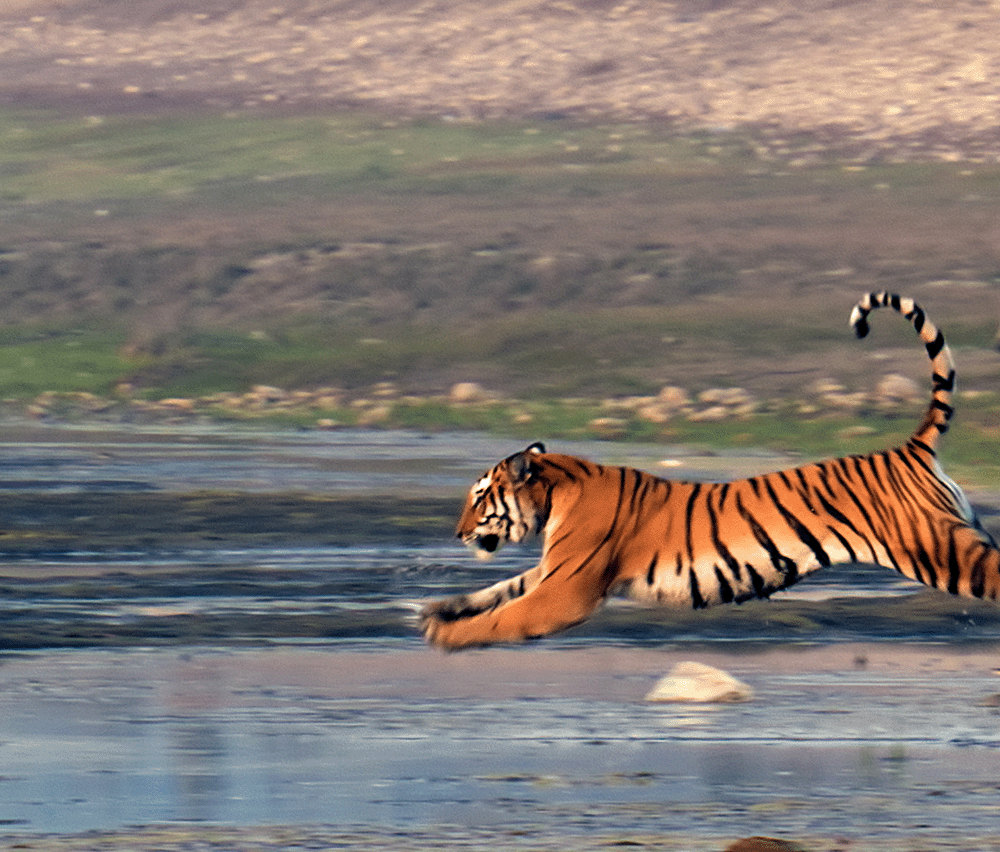
The producers planned out some interesting angles, including drone teams tracking the tigers from the air in real time, along with thermal cameras for night filming and behind the scenes moments with the crew to make an engaging story about the expedition. To capture intimate, long-lens shots of the tigers from the ground - they brought a GSS 512EX gimbal with a Red Raptor camera and a Canon CN20 50-1000mm lens. Mounted on a Polaris buggy, the stabilised system allowed the crew to deploy quickly and pan, tilt and pull focus without disturbing the tigers while travelling over some very rough terrain.
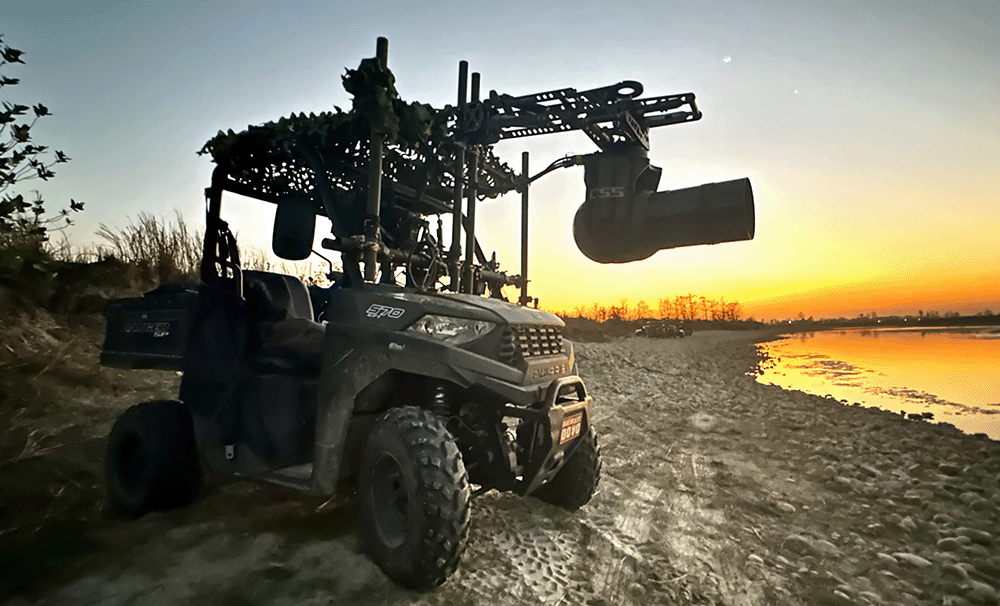
One thing that was special about this particular expedition was that they designed the shoot to follow individual tigers around the clock. By combining a fleet of drones overhead with a mobile team tracking the tigers at ground level, along with thermal cameras for night filming, they were able to observe previously undocumented behaviours and offer viewers a window into the secretive world of tiger life.
And tigers are quite different from their African cousins, as Hug Williams discovered: “I’m very used to working with big cats in Africa. Leopards and lions are often very habituated to vehicles, so I don’t bat an eyelid when a lion walks past the car, because you know they’re not seeing you as a prey item, they’re seeing you as a part of the vehicle. But with tigers that aren’t habituated to vehicles and aren’t accustomed to being followed, it’s a very different ballgame. They’re secretive ambush predators and far more of an unknown quantity. No one had really followed them in this way before. You have to treat any apex predator like that with maximum respect, and as wildlife filmmakers, the last thing you want to do is disturb the animals.” Leading the team and keeping everyone safe were wildlife guides and sisters Sushila and Manju. They grew up in this area and know these tigers better than anyone.
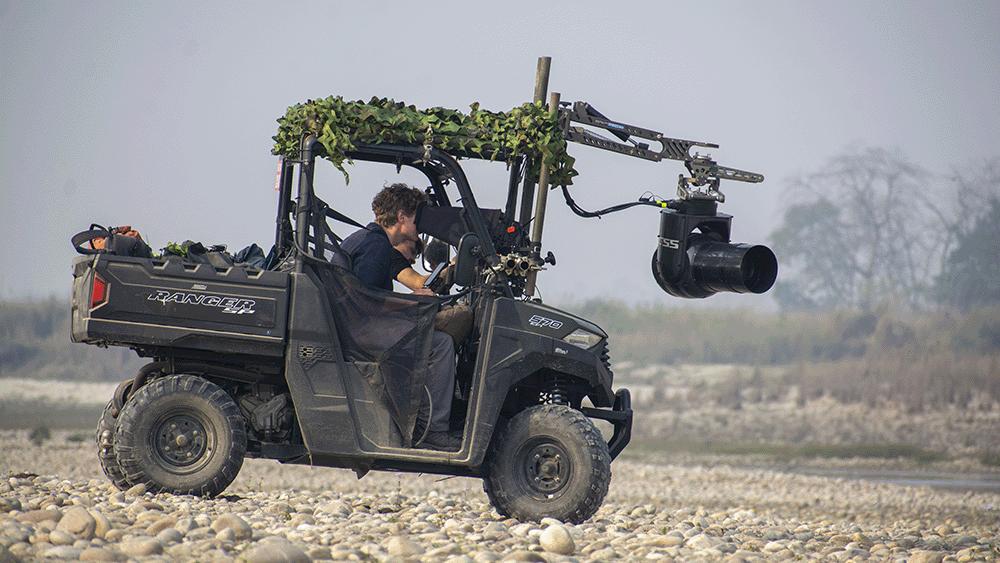
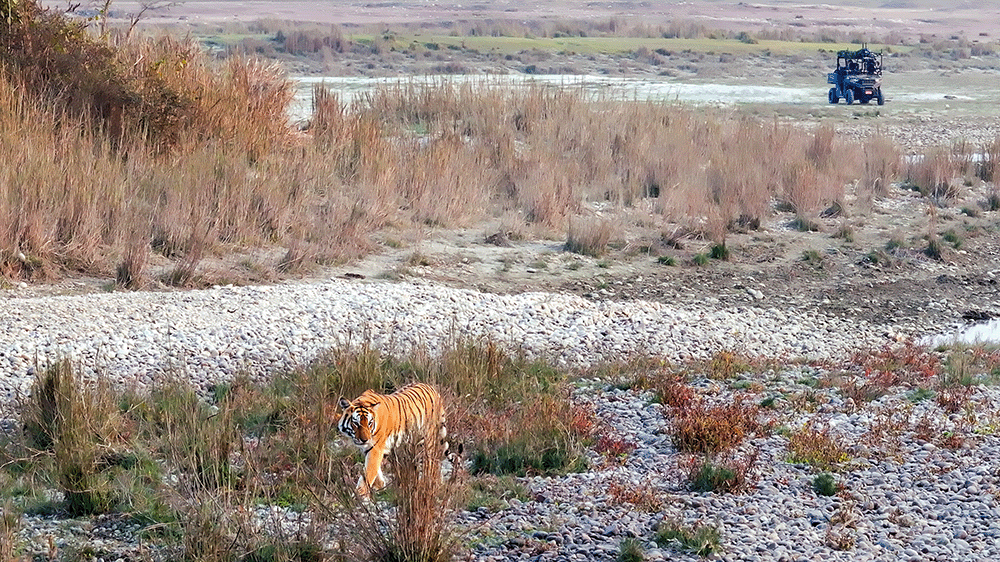
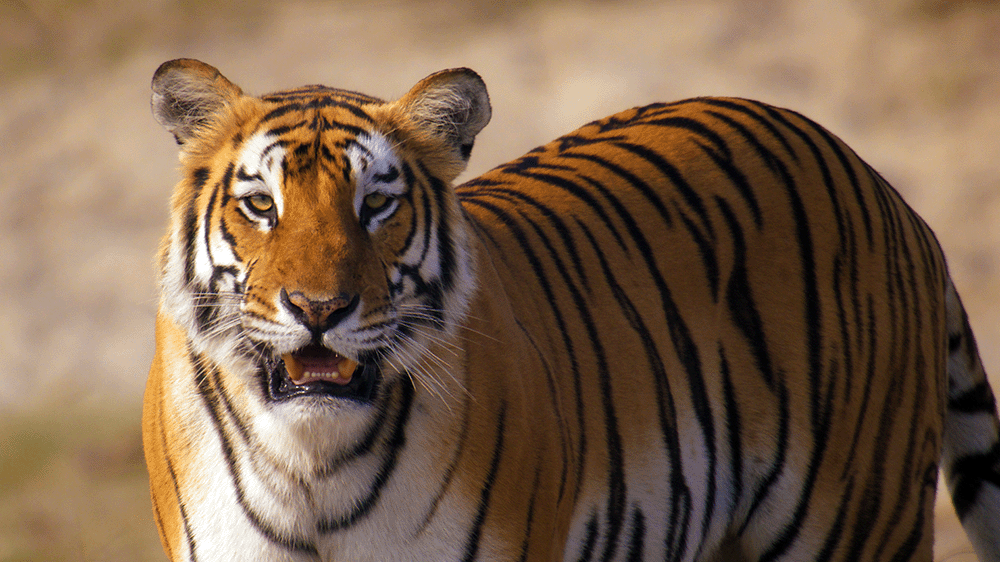
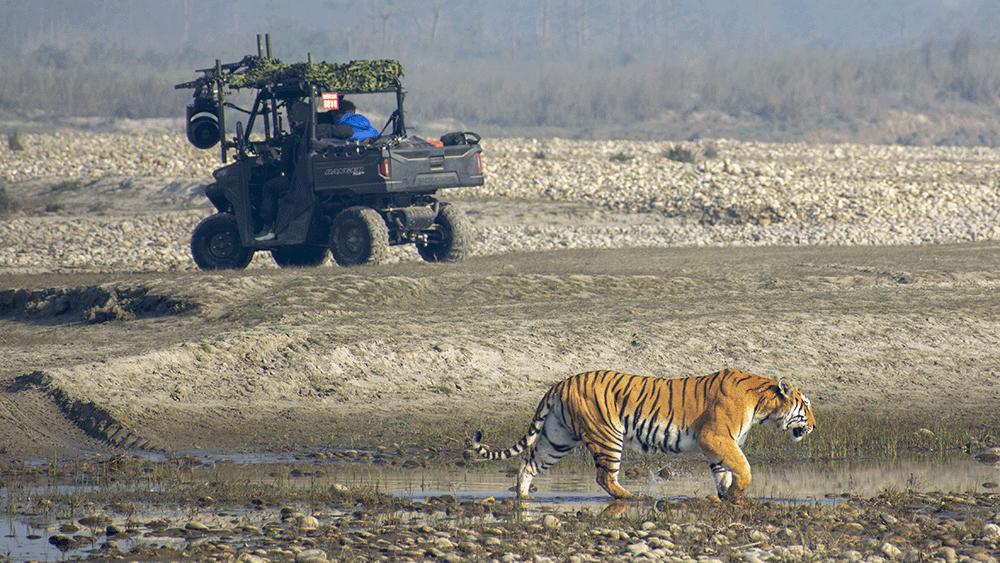
Nepal put the equipment through extremes most shoots never see. The crew arrived in near-freezing temperatures with the Himalayas visible in the background; by the time they left, the region had turned to monsoon — dust one week, deluge the next. The Polaris UTV carrying the gimbal took the worst of it. "The buggy was completely beaten up by the end of the shoot," Hug Williams said, “but the gimbal was working great.” That kind of field durability story is no surprise; it's baked into how GSS builds and supports its systems.

Night-time brought its own discoveries. With thermal cameras running after dark, the crew began picking out tiger heat signatures scattered across the forest — and lost count. "I think on the last night we identified around 15 individual tigers," Hug Williams said, describing a density of tigers he called among the highest anywhere in the world, in a patch of community forest outside the boundaries of the national park. In just over a decade, tiger numbers in Nepal have tripled, making it one of the great conservation success stories of the twenty-first century. Footage from the series is now feeding into published research on the population — a reminder that better tools in the field don't just make for better television, they help scientists build an even deeper understanding of one of the most-studied predators on Earth.
Hear what Max had to say here: